
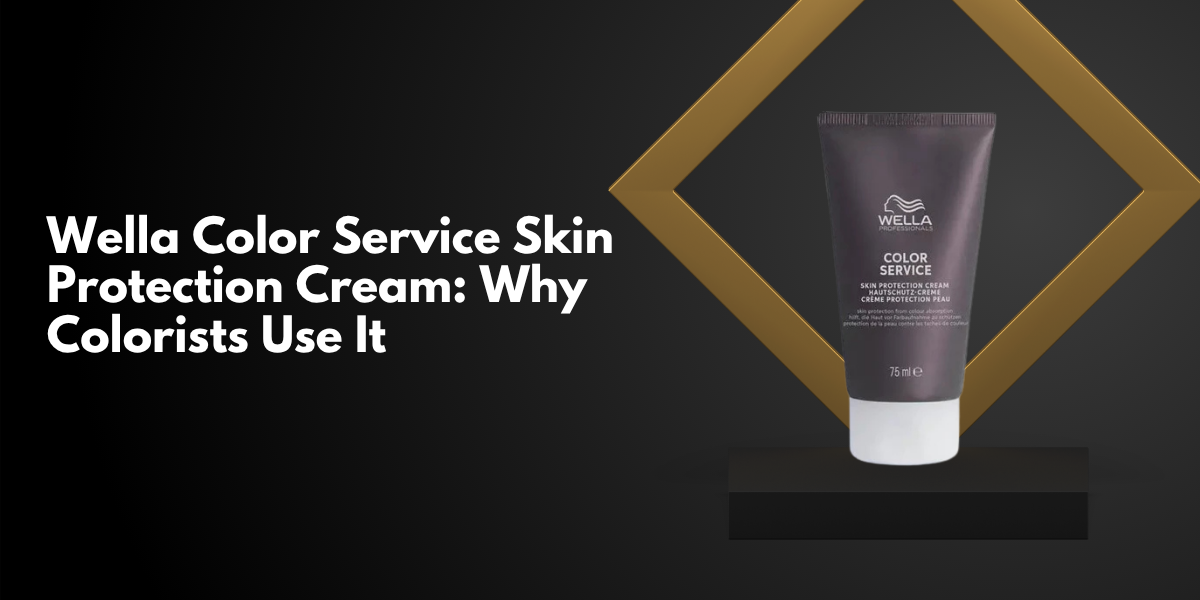
Anyone who has colored their hair knows the frustration of dark stains along the hairline, behind the ears and on the neck. Colorists know it too, which is why a barrier cream is a standard part of a professional service. The Wella Professionals Color Service Skin Protection Cream is made exactly for this job.
Here is why it is a salon essential and how to use it well.
The Problem It Solves
Hair color and lightener are strong products. When they touch the skin, they can leave stains that take days to fade, and they can also irritate sensitive areas. The hairline, ears and neck are the most exposed spots, and they are also the hardest to keep clean during application.
A barrier cream creates a protective layer so the product stays where it belongs, on the hair.
What Is in the Tube?
The Color Service Skin Protection Cream is a barrier cream designed to protect the skin around the hairline, ears and neck during color, lightening or perm services. Its smooth, easy-to-apply formula creates a protective layer that helps prevent staining and irritation from color and chemical products during application.
Why Colorists Like It
Professionals value speed, cleanliness and client comfort. A cream that glides on easily before any chemical service saves time on cleanup, reduces the risk of visible stains at the end of the appointment and helps keep clients comfortable. It is compact at 75ml and easy to keep at the station.
- Shields the hairline, ears and neck during color services
- Helps prevent staining and irritation
- Smooth, easy application before any chemical service
- Useful for color, lightening and perm services
How to Apply It
Apply a thin, even layer along the hairline, over and around the ears and on the nape of the neck before applying any color or chemical product. Make sure you cover any skin that could come into contact with the product, including the tops of the ears and the back of the neck.
A thin layer is enough. Too much can slide and let color creep underneath, so keep it neat.
Working With Color Products
Apply the cream first, then section the hair and start your color application. Keep a clean towel or cotton pad handy to wipe away any color that touches the skin during the service, and check the hairline again before the client leaves the chair.
Use It for Lightening and Perms Too
Lighteners and perm products can be even harsher on the skin than regular color. A protective barrier is a smart habit for every chemical service, not just color. For perms, consider the Perm Service Care Pre-Treatment as well to help prepare the hair.
Is It for Home Use?
This is a professional product, and it is designed for salon services. If you color at home, a barrier cream can still help avoid stains, but always follow the instructions on your color product, do an allergy test before coloring and consider visiting a professional for major changes.
Skin barrier products are common in many fields. According to general information on barrier cream, these products are applied to the skin to form a protective layer against irritants, which is exactly the role they play during hair color services.
Building a Complete Color Service Kit
A good service kit includes gloves, a cape, bowls and brushes, a barrier cream, cotton or wipes for cleanup and quality aftercare products. Adding a color-protection shampoo such as the ColorMotion+ Color Protection Shampoo for clients to take home extends the life of the result.
Frequently Asked Questions
Does it prevent all stains?
It helps prevent staining, but wiping away any stray color quickly is still a good habit.
Is it only for color?
No. It is designed for color, lightening or perm services.
How much should I use?
A thin, even layer along the hairline, ears and neck is enough.
Final Thoughts
Small details make a big difference in a professional service. A barrier cream is a simple step that saves time, protects skin and keeps clients happy, which is why it belongs in every colorist's kit.
Disclaimer
This article is for general informational purposes only. Follow the directions on all products and perform an allergy test before chemical services. Consult a professional if irritation occurs.