
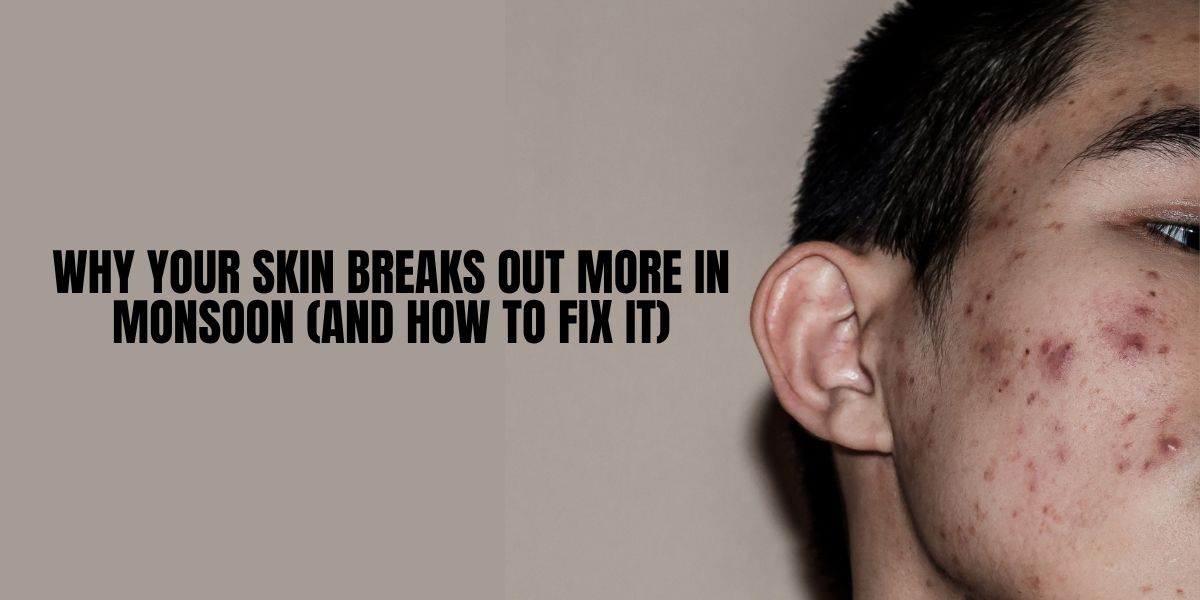
It's a pattern a lot of people notice every year without quite knowing why. Skin that behaves reasonably well most of the year suddenly starts breaking out the moment monsoon arrives. There are a few clear reasons behind this, and browsing our skincare collection with the right ingredients in mind makes it a lot easier to actually fix the problem instead of just reacting to it.
The Humidity and Sebum Connection
Higher humidity levels trick your skin into producing more sebum, partly because the skin barrier behaves differently in moist air. This extra oil, combined with sweat and everyday grime, creates a much easier environment for pores to get clogged. Once pores are blocked, bacteria that normally live harmlessly on skin get a chance to multiply, and that's when breakouts start showing up.
Sweat, Friction and Everyday Habits
Monsoon often means more sweating even without intense physical activity, simply because of the mugginess in the air. Sweat mixed with sunscreen, makeup or pollution particles can clog pores more easily than sweat alone. Wearing masks, using phone screens pressed against the face, or touching your face throughout humid days adds friction and bacteria transfer that many people don't think about as a breakout trigger.
Fungal Acne: The Breakout That Looks Like Acne But Isn't
A lot of people treat every monsoon breakout the same way, assuming it's regular acne, when sometimes it's actually fungal acne, caused by an overgrowth of yeast rather than bacteria. Fungal acne tends to look like small, uniform, itchy bumps, often across the forehead, chest or back, rather than the larger, more varied bumps typical of regular acne.
Treating fungal acne with typical acne products like benzoyl peroxide or salicylic acid usually doesn't help, and can sometimes make it worse. If your usual acne treatment isn't working and the bumps look unusually uniform and itchy, it might be worth considering this possibility and consulting a dermatologist for proper treatment.
Fixing It: A Practical Approach
Rather than throwing every product at the problem, a more targeted approach tends to work better during monsoon specifically.
- Cleanse twice daily with a gentle, non-stripping cleanser rather than something overly harsh
- Use lightweight, oil-free, non-comedogenic products across your entire routine, including sunscreen
- Incorporate niacinamide to help regulate oil production and calm inflammation
- Avoid heavy, pore-clogging ingredients like certain silicones or thick oils during this season specifically
- Wash pillowcases and face towels more frequently than usual, since humidity encourages bacteria growth on fabric
- Change out of sweaty clothes and wash the affected area if you notice breakouts on the chest or back
Diet and Lifestyle Factors Worth Considering
While topical care matters a lot, internal factors also play a role in how your skin behaves this season. Staying hydrated helps regulate oil production, and a diet lower in refined sugar and processed foods can help reduce inflammation that contributes to breakouts. Stress also tends to spike during monsoon for various reasons, and stress hormones are known to trigger or worsen acne in many people, so managing that indirectly supports clearer skin too.
What Not to Do
A few common reactions to monsoon breakouts often make things worse rather than better.
- Over-washing the face multiple times a day, which strips the skin barrier and triggers more oil production
- Picking at breakouts, which increases the risk of scarring and spreading bacteria
- Switching products too frequently without giving any single routine enough time to work
- Skipping moisturiser entirely out of fear it will worsen oiliness
When to See a Dermatologist
If breakouts are persistent, painful, cystic or not responding to a consistent routine after several weeks, professional evaluation is worth considering. A dermatologist can also confirm whether you're dealing with regular acne, fungal acne or another condition entirely, which changes the treatment approach significantly.
Final Thoughts
Monsoon breakouts have clear, identifiable causes, and most of them respond well to a simplified, consistent routine rather than an aggressive one. Patience and consistency tend to matter more than any single miracle product here. For more on the underlying causes, see this overview of acne on Wikipedia.
Disclaimer
This article is for general informational purposes only and does not replace professional dermatological advice. Acne causes and triggers vary between individuals, so results may differ. If breakouts are severe, persistent or unusual in appearance, please consult a dermatologist for accurate diagnosis and treatment.