
The monsoon season is a time of year when the weather gets really hot and humid. This can be tough on your scalp and hair. The monsoon period delivers heavy rainfall and moisture which can make your scalp feel oily and itchy.
You might notice that your hair falls out more during the monsoon season. You might also get dandruff, which's when your scalp gets flaky and itchy.
To take care of your scalp during the monsoon season you need to keep it clean and dry. A clean scalp is the foundation of hair.
So why does the monsoon season affect your scalp much? Well the monsoon season is a time of humidity which means there is a lot of moisture in the air. This can make your scalp feel oily and sweaty.
Here are some things that can affect your scalp during the monsoon season:
* humidity
* Sweat
* Rainwater
* Dirt and pollution
* Much oil on your scalp
* Not enough air getting to your scalp
These things can make your scalp feel oily and itchy. They can also make you get dandruff.
Some common problems that people get on their scalp during the monsoon season are:
* scalp
* Dandruff
* Itchy scalp
* Hair fall
* Scalp odor
To take care of your scalp you should wash your hair regularly. You do not need to wash your hair every day. You should wash it often enough to keep your scalp clean.
Here are some steps you can follow to take care of your scalp:
1. Wash your hair regularly.
2. Do not leave rainwater on your hair. If your hair becomes damp in the rain you should rinse it with water as soon as possible.
3. Dry your hair properly. Do not rub your hair with a towel because this can make your scalp feel irritated. Instead you should gently blot your hair with a towel.
4. Keep your scalp moisturized. You should use a shampoo and conditioner that are suitable for your scalp type.
5. Do not use many heavy hair products. These can make your scalp feel oily and weighed down.
6. Massage your scalp gently. This may enhance circulation to your scalp and make your hair grow stronger.
7. Deep condition your hair, but not your scalp. This can help keep your hair moisturized and healthy.
8. Keep your hair tools clean. You should wash your brushes and combs regularly to prevent the buildup of oil and dirt.
9. Eat a diet. A healthy diet that includes a lot of fruits and vegetables can help keep your hair and scalp healthy.
10. Protect your hair when you go outside. You should carry an umbrella. Wear a hat to protect your hair from the rain.
Some common mistakes that people make when taking care of their scalp during the monsoon season are:
* Leaving their scalp damp for long
* Using too much hair oil
* Washing their hair with water
* Sharing hair accessories
* Ignoring symptoms of scalp problems
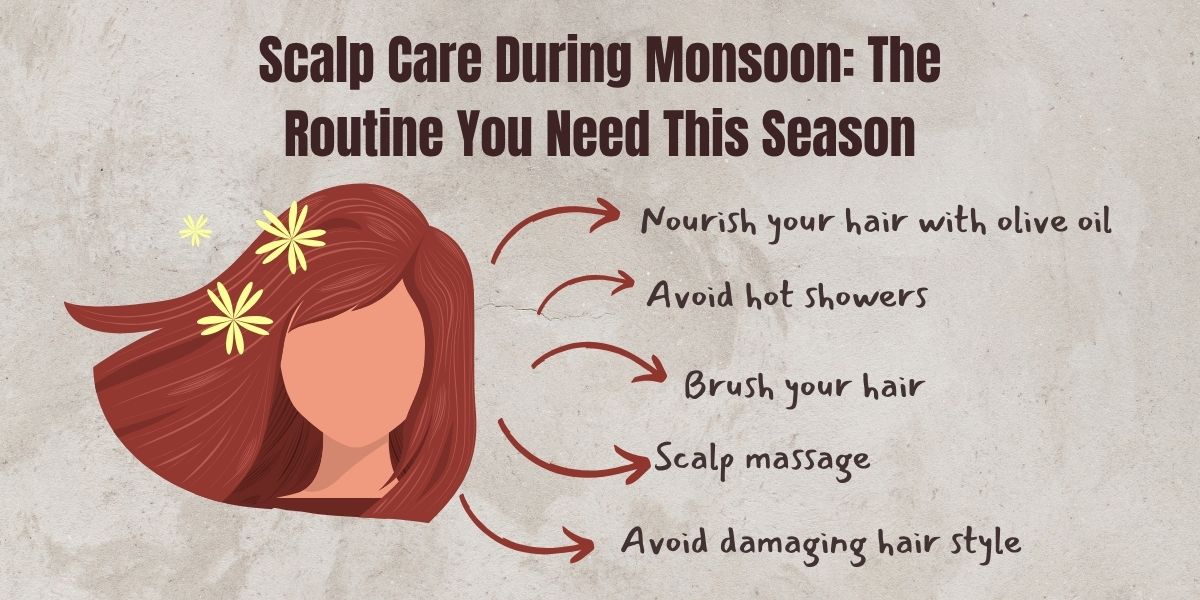
To take care of your scalp you should follow a routine. Here is an example of what you can do:
In the morning you can brush your hair gently. Keep your scalp clean and dry.
If you get caught in the rain you should rinse your hair with water and dry it thoroughly.
On wash days you can cleanse your scalp with a shampoo and conditioner. You can also apply a hair mask to keep your hair moisturized.
You should see a doctor if you have any scalp problems, such as dandruff, itching or hair fall.
The monsoon season can be tough on your scalp. By following these simple steps you can keep your scalp clean and healthy. A healthy scalp is the foundation of hair so it is worth taking the time to take care of it.
You can prevent a lot of scalp problems by keeping your scalp clean and dry. You should also use hair products that are suitable for your scalp type.
If you have any questions about how to take care of your scalp you can ask a doctor or a hair care professional. They can give you advice on how to keep your scalp healthy and strong.
Some people ask, why does my scalp become oily during the monsoon? The answer is that high humidity can stimulate oil production and cause sweat to remain on the scalp for longer.
Another question people ask is, should I wash my hair often during the rainy season? The answer is that it depends on your hair type and lifestyle. If your scalp becomes oily or sweaty you may need to wash it often.
People ask, is it okay to get my hair wet in the rain? The answer is that it is okay. You should rinse your hair with clean water as soon as possible to remove pollutants and reduce scalp irritation.
Some people wonder, can humidity cause dandruff? The answer is that humidity itself does not directly cause dandruff. It can make flaking more noticeable in some people.
Another question people ask is, should I oil my scalp during the monsoon? The answer is that you can use hair oil in moderation. You should avoid excessive application and always shampoo thoroughly to prevent buildup.
Finally people ask, how can I prevent scalp itchiness during the season? The answer is that you should keep your scalp clean dry your hair after washing or rain exposure avoid heavy product buildup and use gentle hair care products suitable for your scalp type.
You should see a doctor if you experience any scalp problems, such as dandruff, itching or hair fall. They can give you advice on how to take care of your scalp and prevent any further problems.
In conclusion taking care of your scalp during the monsoon season is important. You should keep your scalp clean and dry use hair products and avoid heavy product buildup. By following these steps you can keep your scalp healthy and strong and prevent a lot of common scalp problems.
Please note that this article is for purposes only and should not be considered medical advice. If you have any concerns about your scalp or hair you should consult a doctor or a hair care professional for advice.