
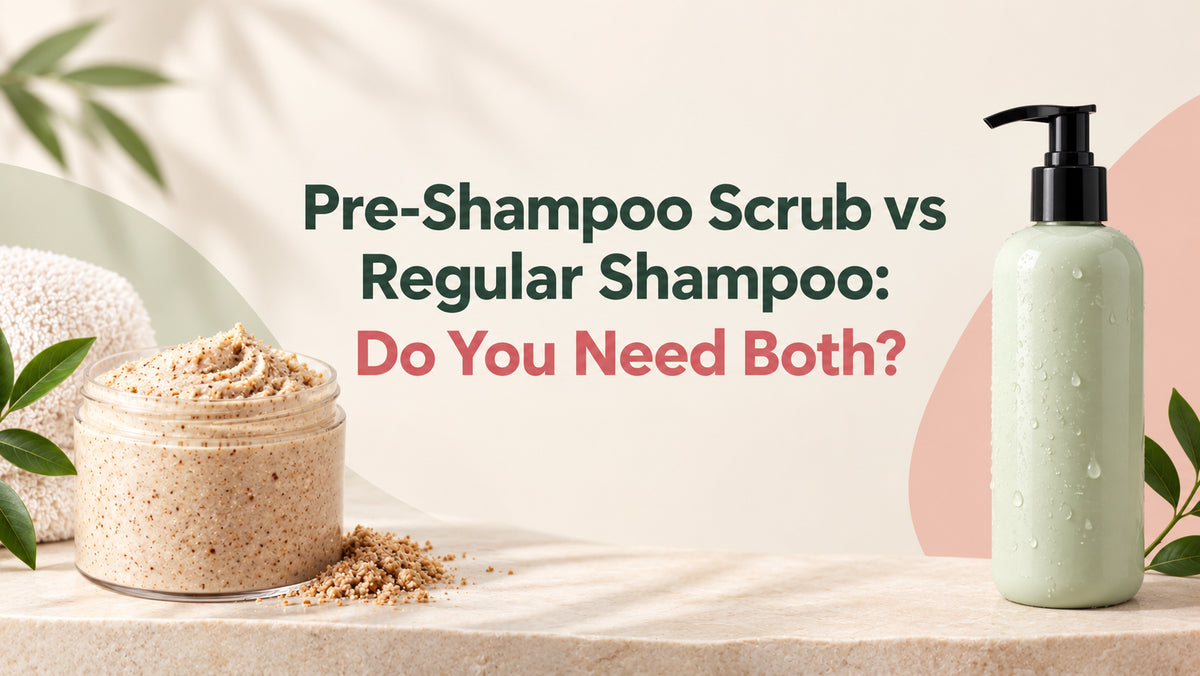
Walk into any salon or hair care aisle and you will find two products that seem to do the same job: shampoo and the newer pre-shampoo scrub. Both promise a clean scalp, so it is fair to ask whether you really need both. The short answer is that they do different things. A shampoo cleans the hair and scalp every wash, while a scrub is an occasional deep step that loosens buildup first. In this guide I will compare the two, using the L'Oréal Professionnel Hair Spa Scalp Rebalancing Pre-Shampoo Scrub and the Biolage Scalp Sync Clarifying Shampoo as examples, so you can decide what fits your routine.
What Regular Shampoo Does
The Wikipedia page on shampoo describes it as a product used to remove oil, dirt and skin debris from the hair and scalp. That is the job of any shampoo: it uses cleansing agents (surfactants) to lift oil and dirt so that water can rinse them away. Most shampoos are gentle enough for regular use, and different formulas are made for different needs such as dry hair, colour-treated hair, oily scalp or dandruff.
A regular shampoo is the base of your routine. You use it every wash, and it keeps your hair and scalp comfortably clean.
What a Pre-Shampoo Scrub Does
A pre-shampoo scrub is applied to the scalp before washing. It contains small exfoliating particles that help loosen dead skin cells and product buildup from the surface. The L'Oréal Professionnel scrub, for example, includes tea tree oil and gentle exfoliating particles and is meant to be used up to twice a week on damp scalp, massaged in and rinsed, before you shampoo.
It does not replace shampoo. Instead, it prepares the scalp so the shampoo can do a better job. Think of it like sweeping the floor before you mop it.
The Key Differences
The first difference is frequency. Shampoo is for every wash, while the scrub is for once or twice a week at most. The second is the action. Shampoo cleans by dissolving oil and dirt, while the scrub works physically to lift buildup. The third is the target. Shampoo cleans the hair and scalp together, while the scrub focuses on the scalp. The fourth is the feel. Many people find the scrub gives a deeper feeling of freshness, while a good shampoo keeps the hair soft and manageable.
Where a Clarifying Shampoo Fits
There is also a middle option: the clarifying shampoo. This is a shampoo designed to give a deeper clean than usual, without needing an exfoliating particle. The Biolage Scalp Sync Clarifying Shampoo is made for scalp-focused cleansing and comes in a large 1000 ml bottle that works well for salons and for households that wash often. You can use a clarifying shampoo once a week or as directed to remove buildup, then go back to your regular formula the rest of the time.
So the three levels look like this. A regular shampoo for everyday cleansing. A clarifying shampoo for a weekly or periodic deeper clean. A pre-shampoo scrub for physical exfoliation of the scalp surface.
Do You Need Both?
For many people, a good shampoo is enough. If your scalp feels comfortable, your hair looks fresh for a day or two after washing and you do not use heavy styling products, you can skip the scrub.
You may want to add one when you notice any of these signs: roots that feel coated or heavy even after washing, a build-up of dry shampoo, wax or spray, flakes that are just surface product and not a medical problem, or a feeling that shampoo no longer lathers well. In that case, a weekly scrub or clarifying wash can help.
If you want to keep it simple, choose one: either a clarifying shampoo once a week or a scrub once a week. Using both on the same day is rarely needed.
A Sample Weekly Routine
Here is an easy plan for someone with a normal to oily scalp who uses styling products. On two or three days of the week, wash with your regular shampoo and conditioner. On one day, use the pre-shampoo scrub on damp scalp, massage for a minute or two, rinse and then shampoo with your regular formula. If your hair feels heavy again after a couple of weeks, swap one regular wash for the clarifying shampoo instead.
For someone with a dry scalp, do the scrub only once every one to two weeks, use a gentle shampoo and focus on a moisturising conditioner for the lengths.
Things to Watch Out For
Do not over-exfoliate. Scrubbing too often or too hard can irritate the scalp and make it oilier or itchy. Do not use scrubs on broken or inflamed skin. If you have a diagnosed scalp condition, ask a doctor or dermatologist before changing your routine. Also remember that coloured or chemically treated hair can feel dry with frequent deep cleansing, so follow with conditioner or a mask on the lengths.
If anything causes burning, redness or itching, rinse well and stop using it.
Common Questions
Is a scrub better than shampoo? Not better, just different. A scrub supports shampoo but does not replace it.
Can I use a clarifying shampoo every day? Usually no. Deep cleansers are designed for occasional use, so follow the label.
Do scrubs help hair growth? There is no proof that a scrub makes hair grow faster. It can help keep the scalp clean, which is a healthy base for the hair.
Which should I buy first? If you can buy only one, start with a shampoo that suits your scalp. Add a scrub or a clarifying shampoo later if you feel buildup.
Final Thoughts
You do not need to choose between a pre-shampoo scrub and a regular shampoo, because they are partners and not rivals. Shampoo is for every wash. A scrub or clarifying wash is an occasional extra that helps when buildup shows up. Try the L'Oréal Hair Spa Pre-Shampoo Scrub once a week, or the Biolage Scalp Sync Clarifying Shampoo as a deeper clean, and see how your scalp responds. Keep it gentle, keep it consistent and let your scalp tell you what it needs.
Note: This article is for general information and is not medical advice.