
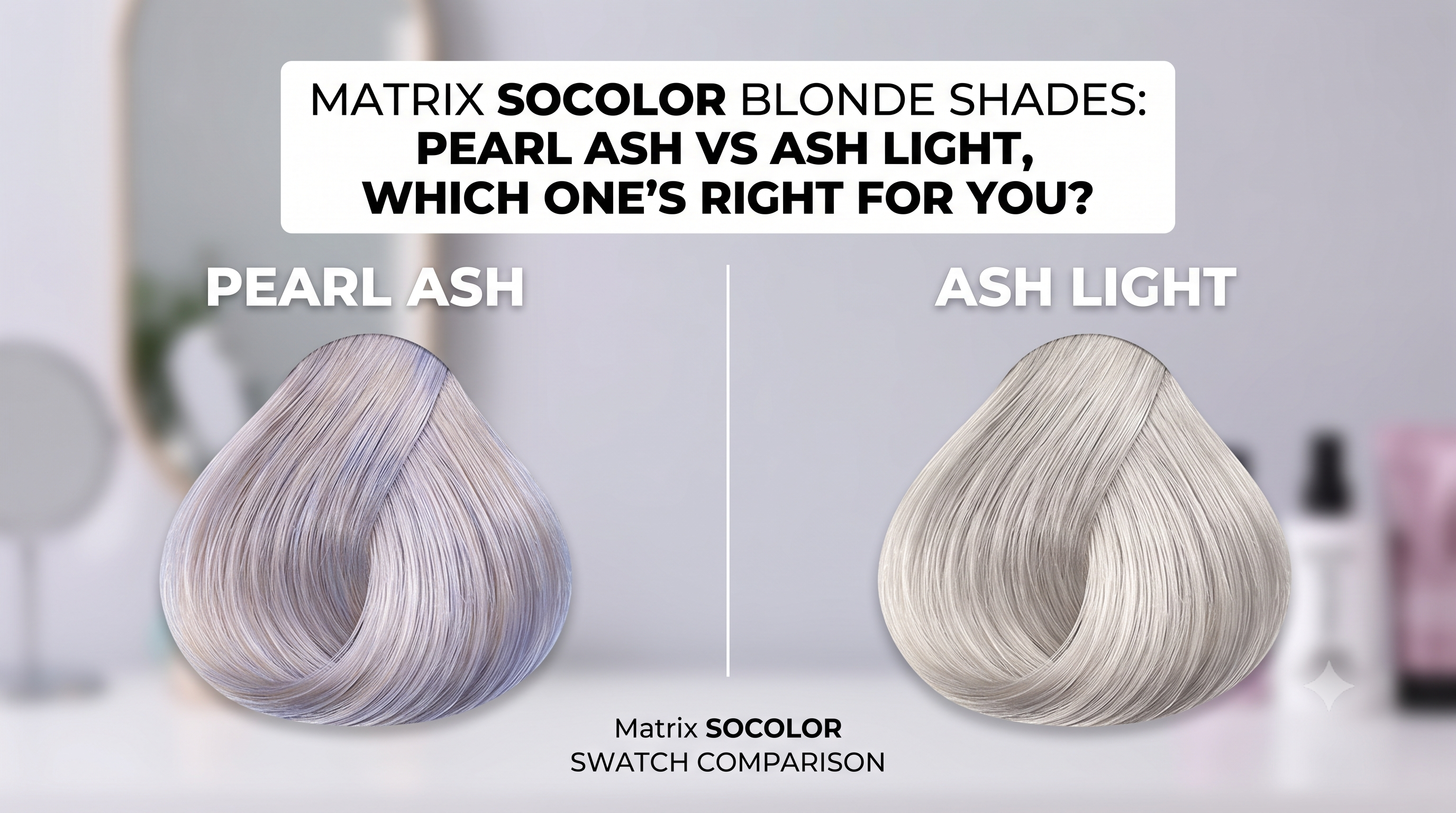
Ash blonde has become one of the most requested color families in salons right now, and for good reason. It cools down warmth, neutralizes brassiness, and gives hair that cool, almost silvery finish that clients love in photos. But once you decide to go ash, the next question is which shade of ash actually fits the client sitting in your chair. Two of the most popular options from the Matrix SOCOLOR line are Matrix SOCOLOR 8.91 Pearl Ash Blonde and Matrix SOCOLOR 9.11 Intense Ash Light Blonde, and while they sound similar on paper, they behave quite differently once applied.
If you have ever mixed up an order or grabbed the wrong tube because the shade numbers looked close enough, you already know how easily these two get confused. This guide breaks down exactly what separates them so you can pick the right one with confidence instead of guessing.
Understanding the Shade Numbers First
Before comparing the two, it helps to understand what the numbers actually mean. The first number in a shade code refers to the level, which is how light or dark the color is on a standard depth scale. The number after the decimal refers to the tone, which is the actual color family being applied. Both 8.91 and 9.11 sit in similar territory on paper, but the level difference and the tone ratio behind each one change how they read on hair.
SOCOLOR 8.91 sits at level 8, which is a medium blonde base, with a tone code of 9.1, meaning it leans primarily ash with a slight violet undertone folded in. SOCOLOR 9.11 sits one level lighter at level 9, a light blonde base, with a stronger double dose of ash in its tone code. That single level difference and the shift in tone intensity is where the real distinction between these two shades begins.
Matrix SOCOLOR 8.91 Pearl Ash Blonde: What It Delivers
This shade is built for clients who want a cooler, pearled finish without going too light. The violet undertone folded into the ash base helps neutralize yellow and orange pigment that tends to show up on medium blonde hair, giving a soft, almost pearlescent finish rather than a flat gray-toned result.
It works particularly well on:
- Clients transitioning from warmer blonde tones who want a cooler, more polished look
- Medium blonde bases that need brassiness neutralized without lifting the hair lighter
- Anyone wanting a subtle pearl sheen rather than an intensely icy result
- Root touch ups on clients already sitting at a level 8 base
Because the violet undertone is gentler than a straight double-ash formula, 8.91 tends to be more forgiving on hair that still has some underlying warmth to neutralize, making it a safer starting point for clients newer to ash tones.
Matrix SOCOLOR 9.11 Intense Ash Light Blonde: What It Delivers
This is the stronger, cooler sibling in the pairing. With a double ash tone concentration at a lighter level 9 base, 9.11 is built to cut through more stubborn warmth and deliver a noticeably icier, more intense cool tone. This is the shade colorists typically reach for when a client wants that crisp, almost platinum-adjacent ash finish rather than a soft pearl effect.
It tends to be the better choice for:
- Clients with lighter, pre-lightened bases who want maximum ash saturation
- Correcting hair that still has heavy yellow or orange undertones after lightening
- Achieving that cooler, editorial-style blonde often requested from reference photos
- Clients who have used ash tones before and want intensity rather than a gentle introduction
Because the ash concentration is stronger, 9.11 requires a bit more attention during application. On hair with minimal warmth to neutralize, it can sometimes read slightly more gray or cool than expected, so a strand test is genuinely worth the extra few minutes here.
Choosing Between the Two
The simplest way to decide is to look at two things: the client's current level and how much warmth actually needs neutralizing. If the client is sitting at a medium blonde base and just needs brassiness softened with a subtle cool finish, 8.91 is usually the safer and more flattering choice. If the client is already lighter, pre-lightened, or specifically asking for that intense icy ash look, 9.11 delivers the stronger result they are picturing.
It is also worth considering maintenance expectations. Intense ash tones like 9.11 tend to fade toward a more neutral or slightly warm result faster than pearl tones, simply because the cool pigment sits on the hair shaft and fades before the underlying warmth fully re-emerges. Setting that expectation with the client upfront, along with recommending a purple or blue toning shampoo for home care, goes a long way in keeping the color looking fresh between salon visits.
A Quick Note on Application
Standard developer selection still applies based on the level of lift needed and the client's natural or previously colored base. As with any ash formula, processing time and even coverage matter more than usual, since uneven application shows up more visibly in cool tones than in warm ones. Sectioning carefully and working with consistent timing across the head helps avoid patchy or uneven ash results, particularly with 9.11 given its stronger tone saturation.
Color theory around neutralizing warm undertones is closely tied to the underlying pigment structure of hair itself. According to general information on hair coloring, the process works by depositing or lifting pigment within the hair shaft, which is exactly why level and undertone both need to be assessed correctly before choosing between two shades that look similar on the shade chart but behave differently in practice.
Both 8.91 and 9.11 are strong additions to a colorist's kit, and having both on hand means you are covered whether a client wants a soft pearled finish or a more intense icy result. The real skill is in reading the client's current base accurately and matching the right level of ash intensity to what their hair actually needs, rather than defaulting to whichever tube is closer on the shelf.
Disclaimer
This article is intended for general educational purposes and reflects common professional color theory practices. Actual results can vary depending on hair porosity, previous chemical treatments, natural pigment, and application technique. Always perform a strand test and patch test before full application, and follow the manufacturer's mixing ratios and processing guidelines for best and safest results.