
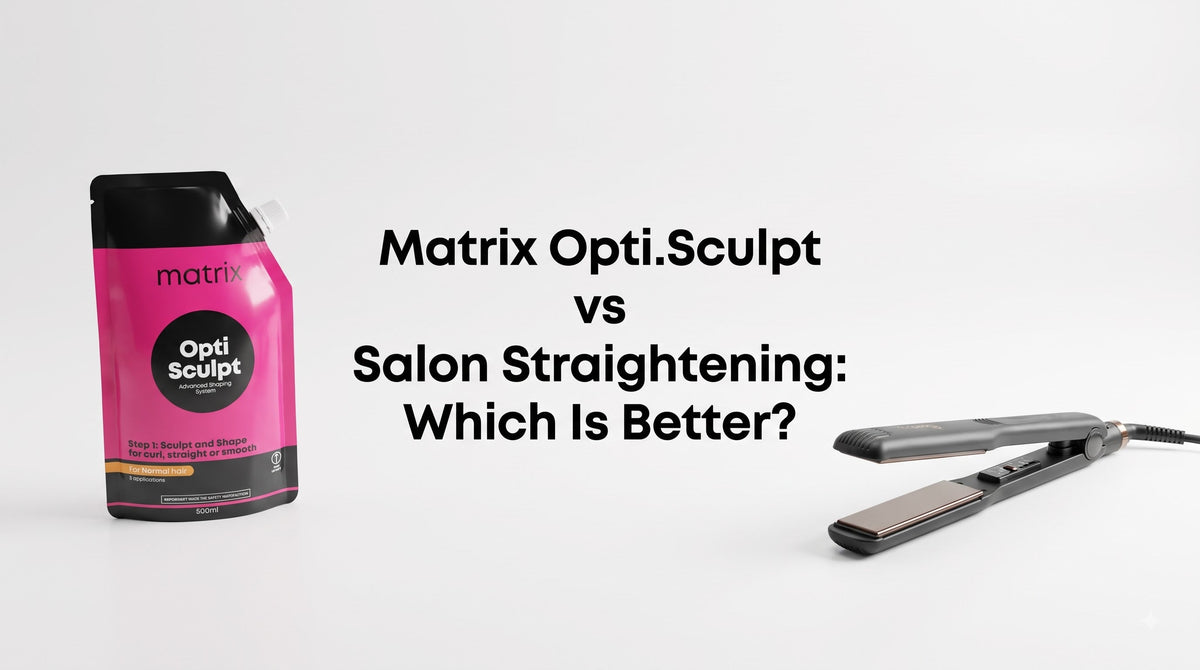
Straightening is one of the most requested salon services, but the choices can be confusing. Should you go for permanent straightening or a smoothing treatment? The Matrix Opti.Sculpt Straightening Cream range is a permanent, low-odour option, and it is helpful to understand how it differs from the smoothing treatments many salons also offer.
Here is how to think about which approach is better for you.
What Is Opti.Sculpt?
Opti.Sculpt is a permanent straightening product from Matrix, described as a new generation of straightening. It gives a natural, shaped-straight look with a breakthrough low-odour formula, shine and more movement in the hair. It is a professional, in-salon product.
Cera-Sculpt Technology
The Normal and Sensitised formulas are enriched with Cera-Sculpt technology, including elastin, collagen and ceramides. Those ingredients are there to help soften and shape the hair while protecting its condition during the service.
Three Formulas for Three Hair Conditions
Opti.Sculpt comes in formulas for different hair. The Normal formula is for fine to medium hair textures, the Sensitised formula is for sensitised or chemically treated hair, and the Resistant formula is designed for hair that is harder to straighten.
What Is a Smoothing Treatment?
Smoothing treatments, including keratin-based ones, are designed to reduce frizz and make hair smoother and shinier. They usually soften the hair's natural texture rather than permanently changing its shape, and the effect gradually fades with washing.
The Key Difference
Permanent straightening changes the internal structure of the hair so it grows out straight where it has been treated. Smoothing treatments mainly coat and smooth the hair, and the result is temporary. Permanent results need touch-ups only on new growth, while smoothing needs repeating.
- Opti.Sculpt: permanent, shaped-straight result with shine and movement
- Smoothing treatments: temporary frizz control and smoothness
- Permanent needs new-growth touch-ups, smoothing needs repeating
- Both need a proper consultation and a strand test
Which Is Better for You?
If you want a lasting straight look and are comfortable with a chemical service, permanent straightening is the more committed option. If you want less frizz, extra shine and more manageable hair without changing the shape of your hair permanently, a smoothing treatment is a lighter choice.
Hair Condition Comes First
The condition of your hair matters more than the product. Very damaged, brittle or recently bleached hair may not be a good candidate for either service. A good stylist will check your hair's strength and history before recommending anything.
Aftercare
After any straightening service, use gentle, hydrating products and avoid harsh shampoos. A weekly repair mask helps maintain condition. Keep heat styling to a minimum in the days after the service and follow your stylist's washing advice.
Chemical straightening has changed a lot over the years. According to general information on hair straightening, modern methods aim to reduce damage and odor compared with older techniques, which is why newer low-odour formulas have become popular in salons.
Ask Your Stylist These Questions
How will my hair's history affect the result? How long will the effect last? What aftercare do I need? How often will I need touch-ups? A good stylist will welcome these questions.
Frequently Asked Questions
Is Opti.Sculpt for home use?
No. It is an in-salon professional product.
Can I straighten colored hair?
The Sensitised formula is designed for sensitised or chemically treated hair, but a consultation is essential.
Does permanent straightening damage hair?
Any chemical service can affect hair, which is why a strand test and aftercare matter.
Final Thoughts
Neither option is better for everyone. Permanent straightening gives lasting results, while smoothing treatments are more flexible. Talk to your stylist, choose based on your hair and lifestyle, and commit to good aftercare.
Disclaimer
This article is for general informational purposes only. Always have a consultation and strand test before any chemical service and follow the manufacturer's directions.