
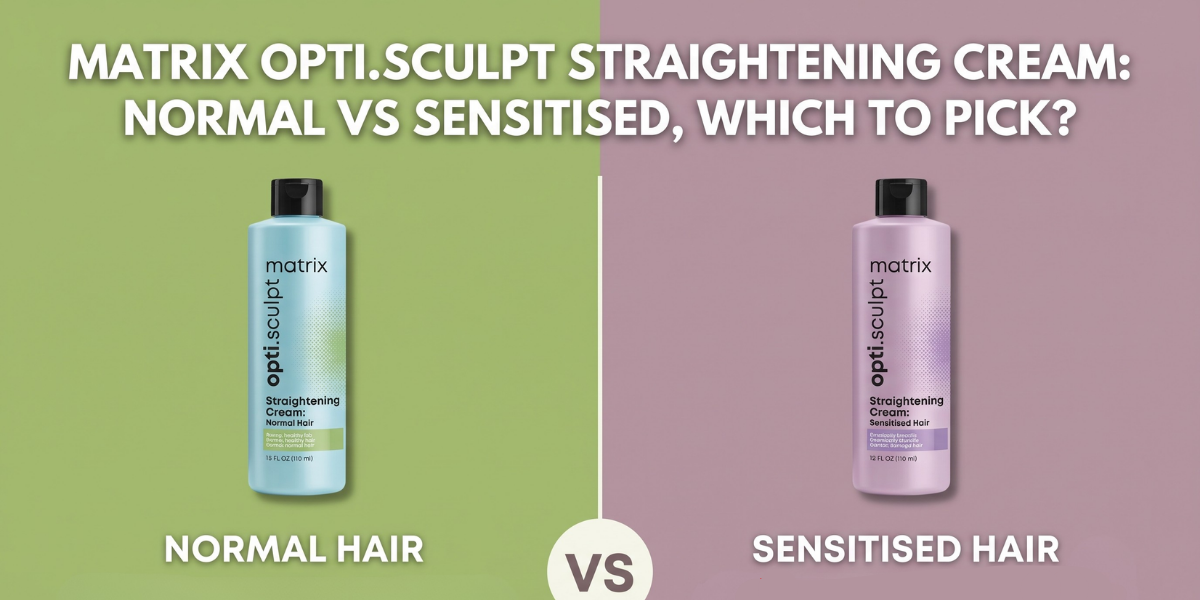
Straightening treatments are not one-size-fits-all, and using the wrong strength formula on the wrong hair type is one of the most common ways a straightening service goes wrong. Matrix addresses this directly with two distinct options, the Matrix Opti.Sculpt NORMAL Straightening Cream and the Matrix Opti.Sculpt SENSITISED Straightening Cream, each formulated for a different hair condition.
If you have ever wondered why the same straightening formula gives beautifully smooth results on one client and disappointing, uneven results on another, hair condition and formula match is very often the answer.
Why Hair Condition Determines Formula Choice
Straightening creams work by breaking and reforming the internal bonds that give hair its natural texture, then resetting those bonds in a straighter configuration. How well and how safely that process happens depends heavily on how resilient the hair's internal structure already is. Virgin, unprocessed hair generally has a more intact structure that can handle a stronger formula, while chemically treated, colored, or otherwise compromised hair needs a gentler approach to avoid over-processing.
This is exactly why Matrix offers two distinct strengths rather than a single universal formula, since applying the wrong strength can either under-process resistant hair or significantly damage already sensitized hair.
When to Choose the Normal Formula
The NORMAL formula is designed for hair that has not undergone significant chemical processing and retains good structural resilience. This includes most virgin hair and hair with minimal color or chemical history. It is formulated to provide effective straightening without needing the extra gentleness built into the sensitised version.
- Best suited for virgin or minimally processed hair
- Provides thorough straightening on more resistant hair textures
- Not recommended for heavily colored, bleached, or chemically treated hair
When to Choose the Sensitised Formula
The SENSITISED formula is built specifically for hair that has already been weakened through coloring, bleaching, or previous chemical services. It is formulated to be gentler on the hair structure while still delivering an effective straightening result, reducing the risk of further damage or breakage during processing.
- Formulated for color-treated, bleached, or previously chemically processed hair
- Gentler processing designed to minimize additional structural stress
- The safer choice whenever there is uncertainty about a client's hair history
Assessing Hair Before Choosing a Formula
A thorough consultation and strand test before any straightening service remains essential regardless of which formula is being considered. Checking hair elasticity, porosity, and processing history helps confirm whether the hair can safely handle the normal formula or genuinely needs the sensitised option. When in doubt, defaulting to the gentler sensitised formula is almost always the safer professional choice.
What Happens When the Wrong Formula Is Used
Using the normal strength formula on already sensitized hair risks over-processing, leading to breakage, excessive dryness, or an uneven straightening result. Using the sensitised formula on virgin, more resistant hair may under-process the hair, resulting in a straightening effect that does not hold as well or fades faster than expected. Matching formula to hair condition genuinely changes the outcome, not just the processing time.
The internal bonds responsible for hair's natural texture and how it responds to chemical straightening are a well documented part of hair structure. According to general information on hair straightening, chemical straightening processes work by altering these internal bonds, which is exactly why hair condition and prior chemical history play such a significant role in determining a safe and effective approach.
Choosing between the Normal and Sensitised Opti.Sculpt formulas is not about which one is better in general. It is about which one matches the actual condition of the hair in front of you, and that assessment is worth taking seriously before every service.
Aftercare Considerations for Both Formulas
Regardless of which formula is used, proper aftercare with sulfate-free, straightening-safe products helps maintain the result and protect hair health afterward. Recommending a suitable home care routine to clients following either service helps extend the life of the straightening result while minimizing additional stress on the hair.
Documentation and Client Communication
Keeping accurate records of which formula was used on each client, along with processing times and any relevant hair history, makes future services more predictable and safer. This is particularly valuable for clients who return for touch ups or additional chemical services, since knowing exactly what was used previously helps avoid combining treatments in ways that could over-process the hair.
Clear communication with clients about why a particular formula was chosen also builds trust and helps them understand that the decision was based on their specific hair condition rather than a one-size-fits-all approach.
Patch Testing and Sensitivity Checks
Regardless of which formula strength is chosen, a patch test at least 48 hours before the full service remains an important safety step, since individual sensitivities to chemical straightening formulas can vary even among clients with similar hair types. Skipping this step to save time is not worth the risk of an adverse reaction during a full service.
Final Thoughts on Formula Selection
Getting the formula choice right at the start of a straightening service sets the tone for the entire result, both immediately and in how well the hair holds up afterward. Taking the time to properly assess hair condition before reaching for either formula is a small step that makes a significant difference in outcome.
Disclaimer
This article is intended for general educational purposes and reflects common professional practices. Always perform a strand test and thorough consultation before any chemical straightening service, and follow the manufacturer's application and processing guidelines for best and safest results.