
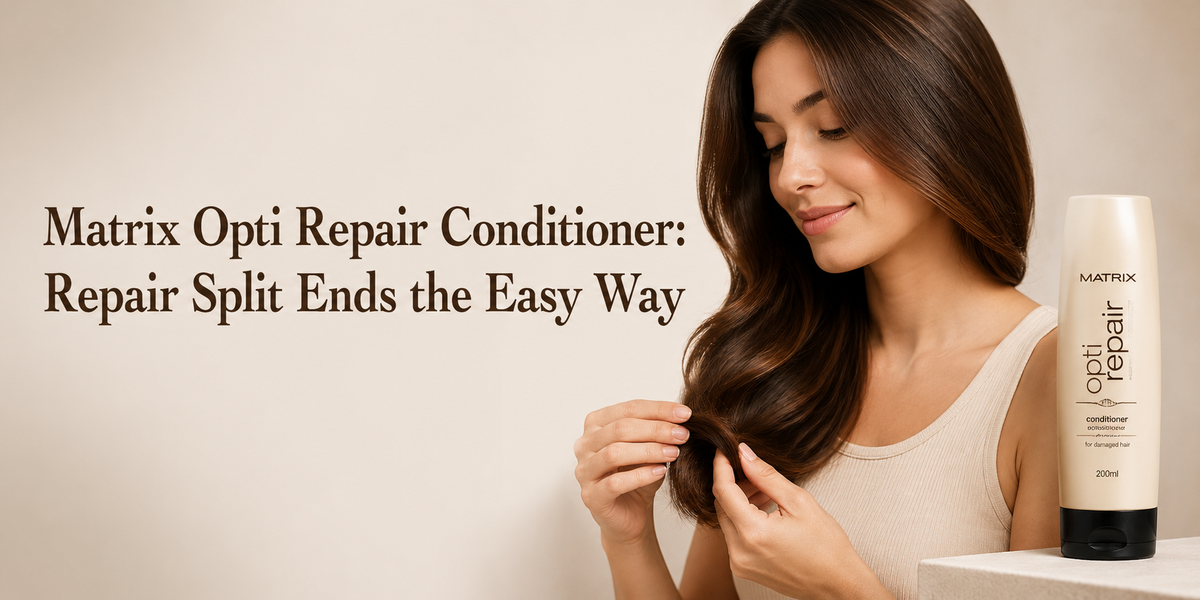
Split ends are one of those problems that quietly get worse the longer they are ignored. What starts as a few frayed tips can travel further up the strand over time, eventually forcing a bigger trim than you originally wanted. The good news is that a well formulated conditioner, used consistently, can meaningfully slow that process down. That is exactly where the Matrix Opti Repair Professional Liquid Protein Conditioner earns its place in a repair focused routine.
If your ends constantly feel rough, catch on your fingers, or look frayed no matter how often you trim, this is worth understanding before your next salon visit.
Why Split Ends Happen in the First Place
Split ends form when the protective outer layer of the hair shaft wears down, usually from a combination of heat styling, chemical treatments, friction from brushing or clothing, and general dryness. Once that protective layer is compromised, the strand becomes more vulnerable at the tip, which is the oldest and most exposed part of the hair.
It is worth being upfront here: no conditioner can permanently fuse a split end back together the way a trim can. What a good repair conditioner does instead is smooth the cuticle, reduce friction, and slow down further splitting, which buys time between trims and prevents existing splits from traveling further up the strand.
How the Opti Repair Conditioner Helps
This conditioner uses a liquid protein formula aimed at reinforcing weak points along the hair shaft, particularly at the ends where damage accumulates most. Rather than just coating the surface with a heavy layer of silicone to temporarily smooth things over, it works to support the strand structurally, which is a more meaningful form of repair even if the results build gradually rather than instantly.
A few reasons this conditioner is worth adding to a repair routine:
- Liquid protein formula that reinforces weak points along the strand
- Smooths the cuticle layer to reduce friction and catching
- Lightweight enough for regular use without weighing hair down
- Works well as a companion to the matching Opti Repair shampoo
Using It the Right Way
Apply generously from mid length to ends after shampooing, since this is where damage and dryness are typically most concentrated. Roots rarely need the same level of repair focus, so concentrating product where it is actually needed makes the conditioner more effective without over-conditioning the scalp area.
For hair with significant existing damage, using this conditioner every wash for the first few weeks helps build a stronger foundation faster. Once hair starts feeling noticeably smoother and less prone to catching, dropping to every other wash alongside a lighter daily conditioner is usually enough to maintain the improvement.
What Won't Fix Split Ends Alone
It is worth being realistic here. Even the best repair conditioner cannot fully undo existing splits, and skipping regular trims while relying entirely on product will not solve the underlying problem. The most effective approach combines a repair focused conditioner with regular trims every eight to twelve weeks, reduced heat exposure, and a heat protectant on the days styling tools are used.
Think of the conditioner as damage control and prevention rather than a cure. It slows down how fast new splits form and makes existing ends look and feel healthier between trims, which is genuinely valuable even though it is not a permanent fix on its own.
The structural weakening that leads to split ends is closely tied to wear on the hair's outer protective layer over time. According to general information on split ends, this damage accumulates from repeated mechanical and chemical stress, which is exactly why a repair conditioner paired with reduced heat exposure and regular trims tends to produce the best long term results.
If your ends have been feeling rough or fraying more than usual, building the Opti Repair Conditioner into your regular wash routine, alongside sensible trim scheduling, is a practical way to slow the damage down and keep hair looking healthier between salon visits.
How This Fits Into a Full Salon Recommendation
When recommending this conditioner to clients, it helps to frame it as part of a broader maintenance plan rather than a standalone fix. Pairing it with a matching protein based shampoo reinforces the treatment rather than working against it, since a clarifying or sulfate heavy shampoo used alongside a repair conditioner can undo some of the benefit before it has a chance to absorb properly.
For clients who color or heat style frequently, suggesting a monthly check-in on how their ends are holding up, rather than waiting for a scheduled trim to reveal significant damage, helps catch problems early. Small adjustments like this tend to build client trust and result in noticeably better hair health over repeated visits, which benefits both the client and the long term relationship with the salon.
When to Consider a Deeper Repair Treatment
If ends continue fraying despite consistent use of this conditioner, it may be a sign that damage has progressed further than a leave-in conditioning step alone can address. In those cases, pairing this product with a weekly deep repair mask, or scheduling a professional bond building treatment at the salon, can give hair the more intensive support it needs before daily conditioning alone can maintain the improvement.
Recognizing when a routine needs to be escalated rather than assuming a single product will handle every stage of damage is part of setting realistic expectations, both for personal use and when advising clients in a salon setting.
It is also worth noting that split ends vary in severity, and hair that has been chemically treated multiple times may need a more conservative trim schedule alongside product support to keep pace with ongoing damage. Being upfront about this with clients, rather than promising product alone can fully substitute for regular maintenance trims, tends to build longer term trust and better results.
Disclaimer
This article is for general informational purposes only and is not a substitute for professional advice from a hairstylist, dermatologist, or trichologist. Results can vary based on hair type, damage severity, and consistency of use. Persistent breakage or scalp irritation should be evaluated by a qualified professional.