
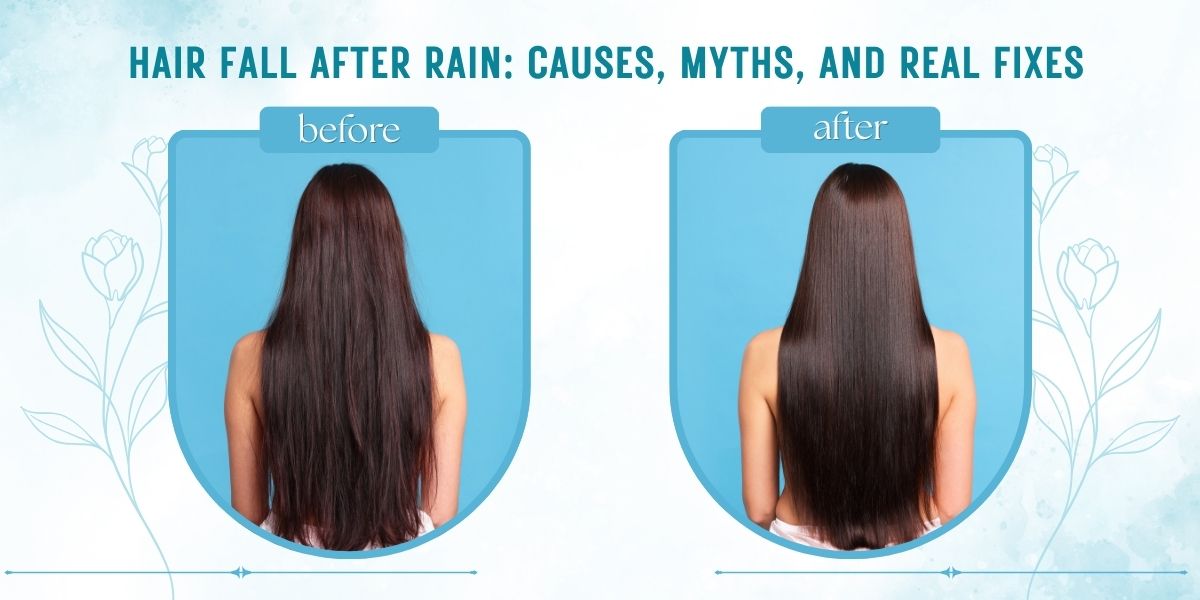
Almost everyone notices more hair in the drain or on their brush once monsoon rolls around, and it's enough to make anyone a little anxious. Before you panic and start buying every hair fall product on the shelf, it helps to browse our hair care collection with a clear idea of what's actually causing this and what's just seasonal noise.
Why Hair Fall Increases During Monsoon
Humidity is the biggest factor here. It makes your scalp sweat more, which creates a warm, moist environment where fungal and bacterial growth thrives more easily than usual. This can lead to itching, flaking and inflammation, all of which weaken hair follicles over time and contribute to increased shedding.
Rainwater itself isn't exactly gentle either. It often carries pollutants and can have a different pH than what your scalp is used to, which sometimes irritates the scalp and disrupts its natural balance. Add in humidity making hair weaker and more prone to breakage in general, and you've got a season that's genuinely tougher on hair than most others.
Common Myths About Monsoon Hair Fall
There's a lot of confusing advice floating around, and separating myth from fact makes it easier to actually fix the problem instead of just guessing.
- Myth: Rainwater alone causes permanent hair loss. Fact: occasional rain exposure won't cause lasting damage, but repeated exposure without washing it out afterward can weaken hair over time
- Myth: Washing hair less during monsoon prevents fall. Fact: skipping washes actually lets sweat, oil and fungal buildup accumulate on the scalp, which can make shedding worse
- Myth: Oiling hair heavily before rain protects it. Fact: heavy oiling can trap moisture and dirt against the scalp, especially in humid weather, which sometimes does more harm than good
- Myth: Monsoon hair fall is always a sign of a serious health issue. Fact: seasonal shedding is common and usually temporary, though it's still worth monitoring if it continues beyond the season
What's Actually Happening on Your Scalp
A healthy scalp naturally sheds around 50 to 100 hairs a day as part of its normal growth cycle. During monsoon, this number can temporarily rise due to the added stress of humidity, fungal activity and scalp irritation. This is usually a seasonal shift rather than a sign of long term hair loss, though it can feel alarming when you're noticing it every day.
Real Fixes That Help
Rather than reaching for random products, focusing on a few consistent habits tends to make the biggest difference during this season.
- Rinse hair thoroughly with clean water immediately after getting caught in the rain, rather than letting it dry naturally with rainwater still in it
- Use a gentle, sulfate-free anti-hair fall shampoo two to three times a week rather than daily
- Keep the scalp clean and dry between washes, especially if you sweat a lot during humid days
- Add a lightweight scalp serum with ingredients like caffeine, biotin or redensyl if shedding feels more than usual
- Avoid tight hairstyles that pull on wet or weakened hair, since this adds unnecessary mechanical stress
- Eat a balanced diet with enough protein, iron and biotin, since internal nutrition affects hair strength just as much as topical care
When Monsoon Hair Fall Might Need Attention
Seasonal shedding usually settles down once the weather stabilises, but if you're noticing bald patches, significant thinning or hair fall that continues well past monsoon, it's worth getting it checked by a dermatologist. Ongoing scalp itching, redness or flaking that doesn't improve with basic care is also a sign that something more specific might be going on, like fungal infection or seborrheic dermatitis, both of which need targeted treatment rather than just a change in shampoo.
Building Consistency Into Your Routine
Hair fall improvement rarely happens overnight, and it's easy to give up on a routine after a week or two because you don't see instant results. Most scalp and hair fall treatments need at least six to eight weeks of consistent use before you notice a real difference, so patience matters just as much as the product itself.
Final Thoughts
Monsoon hair fall is common and usually temporary, driven mostly by humidity, scalp irritation and rainwater exposure rather than anything more serious. A few consistent habits around cleansing and scalp care go a long way in keeping it manageable through the season. For more detail on the biology of shedding, see this overview of hair loss on Wikipedia.
Disclaimer
This article is for general informational purposes only and does not replace professional medical or dermatological advice. Hair fall can have multiple underlying causes, some of which require clinical diagnosis. If shedding is severe, persistent or accompanied by scalp pain, bald patches or other symptoms, please consult a dermatologist or trichologist for proper evaluation.