
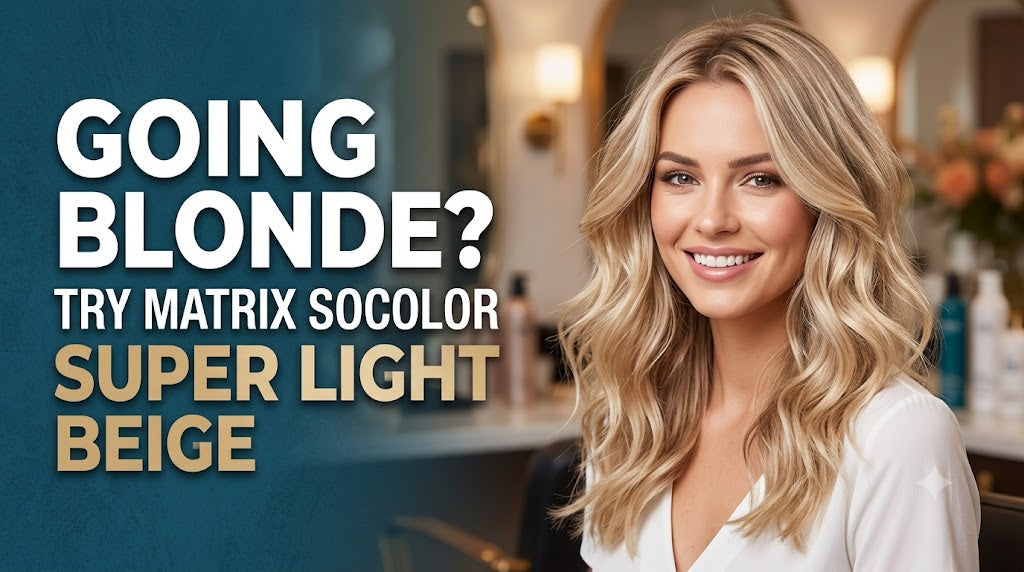
Not every blonde is created equal, and beige tones have quietly become one of the most requested finishes in salons because they manage to stay light and bright without tipping into the harsh, overly cool territory that ash tones sometimes bring. If a client walks in asking for a soft, natural looking blonde that still reads light in photos, Matrix SOCOLOR 12.13 Super Light Beige Blonde is worth having in your color line up.
If you have mostly worked with straightforward ash or golden blondes, beige sits in an interesting middle ground that is worth understanding before your next lightening or toning appointment.
What Beige Blonde Actually Means
Beige as a tone family blends cool ash undertones with a touch of warmth, usually gold, to neutralize brassiness without creating that flat, overly gray or icy result some clients find unflattering. The result reads as a soft, natural, sun-kissed blonde rather than an obviously toned or artificial looking one, which is exactly why it has become such a popular request.
SOCOLOR 12.13 sits at level 12, one of the lightest levels available, combined with a 1.3 tone that leans ash with a gentle gold balance folded in. This combination is what gives it that soft beige finish rather than a harsher, purely ash result.
Who This Shade Works Best For
This shade tends to suit clients who want maximum lightness without the stark, cool cast that pure ash tones can sometimes create, especially on very light or pre-lightened hair. It also works well for clients transitioning away from overly warm, brassy blonde results who want something softer than a full ash correction.
A few scenarios where this shade shines:
- Clients wanting a natural, sun-kissed blonde finish rather than an obviously toned look
- Correcting brassy or overly warm pre-lightened hair without going too cool
- Highlights or balayage work where a soft, blended finish is the goal
- Clients with fair to medium skin tones who find pure ash blonde too harsh against their complexion
Working With Level 12
Because this is one of the lightest levels on the shade chart, it typically requires hair that is already significantly pre-lightened or naturally very light to achieve the intended result. Applying it directly to darker, unlightened hair will not produce the same soft beige finish, since there is not enough underlying lightness for the tone to properly express itself.
As with any very light level formula, even application and careful attention to processing time matter more than usual. Uneven lightening underneath will show through the toner, so making sure the base is properly and evenly prepped before applying this shade is a step worth not rushing.
Maintaining the Result
Very light beige blondes are more prone to warming up between salon visits compared to darker blonde shades, simply because there is more surface area exposed to environmental factors like sun and hard water. Recommending a toning shampoo for home maintenance, along with UV protection for color treated hair, helps clients hold onto that soft beige finish longer between appointments.
Setting realistic expectations about touch up timing is also worth doing upfront. Very light, tonal blondes like this one generally need refreshing more frequently than deeper, more pigmented shades, and clients appreciate knowing that before they commit to the look.
The visual perception of blonde hair tones is influenced by how pigment concentration and hair structure interact with light. According to general information on blond hair, lighter hair reflects more light due to lower melanin concentration, which is part of why very light tonal shades like beige blonde can look noticeably different depending on lighting and require more careful color maintenance to stay consistent.
Beige blonde earns its popularity by striking a balance most clients are actually asking for without realizing the technical term for it: light, soft, and natural looking rather than obviously cool or warm. Having SOCOLOR 12.13 in your kit gives you a reliable way to deliver that result consistently.
Pairing With the Right Developer and Technique
Because level 12 formulas are working with such a high degree of lift, developer choice matters significantly in how the final tone reads. Using a lower volume developer than intended, hoping to reduce processing time, often results in an incomplete lift that leaves the beige tone looking muddier or less true to the intended shade. Following the recommended developer strength for the level of lift needed gives the tone its best chance of developing as designed.
For balayage or highlight work specifically, foil placement and saturation consistency matter just as much as the formula itself. Uneven saturation within the lightened sections can create visible banding once the beige tone is applied, so taking the extra time during the lightening stage pays off significantly once the toning step begins.
Communicating the Look With Clients
Because beige blonde sits in a tonal middle ground, client communication before the service matters as much as the technical formulation. Reference photos can be misleading depending on lighting, camera settings, and screen calibration, so talking through what beige actually means compared to ash or golden blonde helps set accurate expectations before the color is applied rather than after.
Showing swatches in natural light when possible, and being clear about how the tone may shift slightly once it settles over the following days, helps avoid client disappointment and builds trust in the recommendation being made.
It also helps to document formulas and developer ratios used for each client, since revisiting or adjusting a very light tonal shade like this one in future appointments becomes far easier with an accurate record of what was used previously.
Ultimately, the best results with any very light tonal formula come from patience, accurate lightening, and clear communication, three things no product alone can substitute for.
Disclaimer
This article is intended for general educational purposes and reflects common professional color theory practices. Actual results can vary depending on hair porosity, previous chemical treatments, natural pigment, and application technique. Always perform a strand test and patch test before full application, and follow the manufacturer's mixing ratios and processing guidelines for best and safest results.