
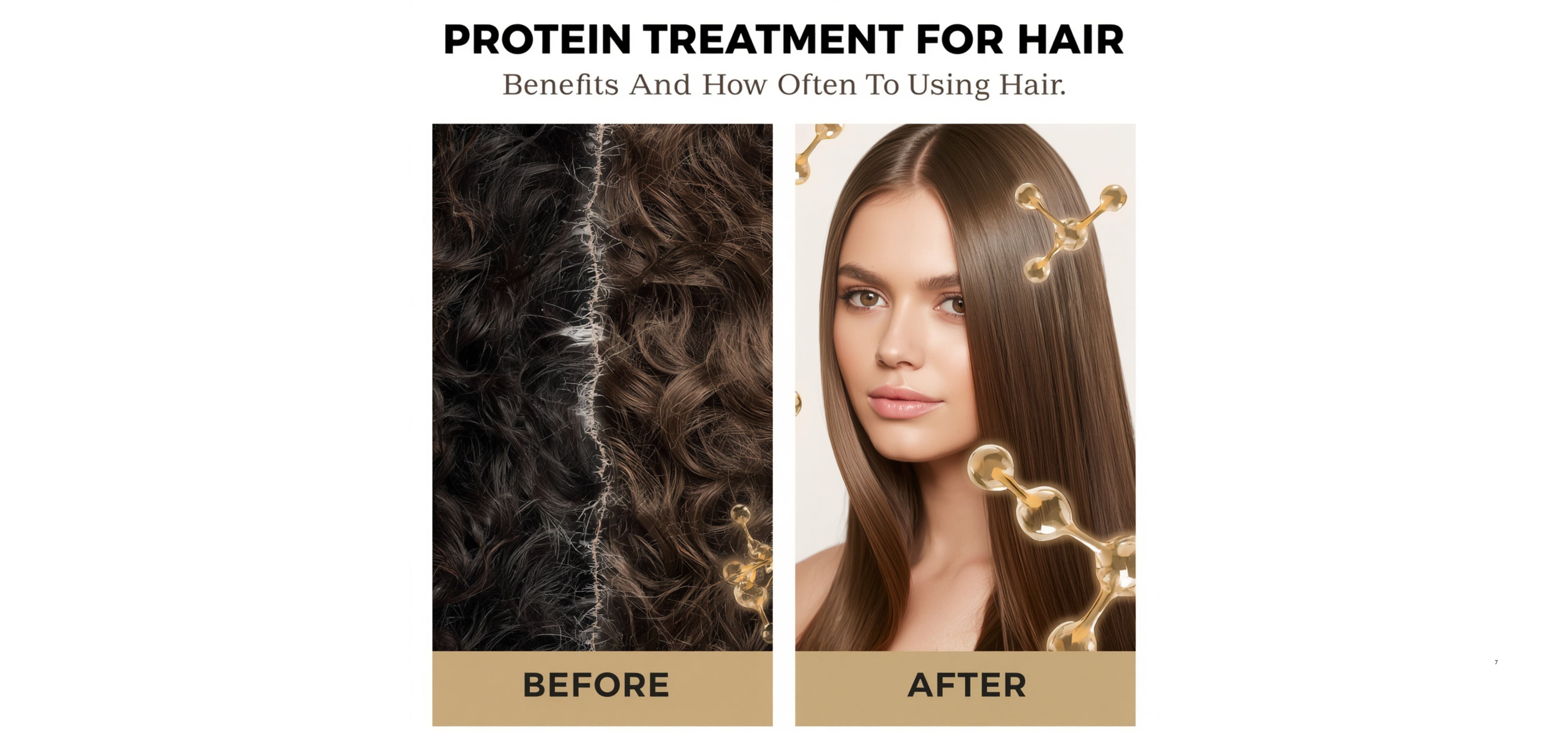
If your hair feels weak, stretchyor prone to breakage you may have come across protein treatments as a solution.Protein treatments have become popular among people looking to strengthen hair and improve its appearance.Despite the hype many people aren’t sure what protein treatments do.
Can they fix damaged hair?
How often should you use them?
Is it possible to use too much protein?
Understanding how protein treatments work can help you decide if they’re right for your hair.
What Is a Protein Treatment?
A protein treatment is a hair product that helps make hair stronger by adding proteins to it.
Hair is mostly made of a protein called Keratin.
Everyday wear and tear can damage this protein making hair weaker.
Protein treatments help fix damaged hair making it feel stronger.
They come in forms:
- Deep conditioning masks
- repair treatments
- Salon treatments
- Leave-in strengthening products
Why Does Hair Need Protein?
Healthy hair needs a balance of:
- Protein
- Moisture
When this balance is off hair can get damaged.
Hair can lose protein from:
- Heat styling
- Chemical treatments
- Bleaching
- Coloring
- Brushing
- Environmental exposure
As hair loses protein it can become weaker. Break more easily.
Benefits of Protein Treatments
Helps Strengthen Hair
Protein treatments make hair stronger.
By fixing areas they help hair feel more resilient.
Reduces Breakage
Weak hair breaks easily.
Protein treatments can help reduce breakage.
Improves Hair Appearance
Damaged hair looks frizzy, rough and dull.
Protein treatments can make hair look smoother and healthier.
Supports Elasticity
Healthy hair stretches a bit before going to its shape.
Protein treatments help with this balance.
Helps Treated Hair
People who color, bleach or chemically process their hair often benefit from protein.
These treatments help keep hair looking healthy.
Signs Your Hair May Need Protein
Not everyone needs protein treatments.
Some signs you might need protein:
Excessive Breakage
Hair breaks easily when brushed or styled.
Stretchy Hair
Wet hair stretches much before breaking.
Weak or Limp Hair
Hair lacks strength. Can’t hold styles.
Increased Damage After Chemical Services
Color-treated or bleached hair can get more fragile.
Split Ends and Rough Texture
Protein loss can make hair look rough.
Protein Deficiency vs Moisture Deficiency
It’s hard to tell if hair needs protein or moisture.
The symptoms can be similar.
Hair That Needs Protein
Often feels weak, stretchy, fragile and breaks easily.
Hair That Needs Moisture
Often feels dry, rough, brittle and hard to manage.
Many people need both.
Can You Use Much Protein?
Yes you can.
This is called protein overload.
Much protein can make hair stiff, dry, brittle and break more easily.
How Often Should You Use a Protein Treatment?
It depends on your hair.
Damaged Hair
A protein treatment every few weeks might be enough.
Damaged Hair
Some people benefit from more treatments.
Damaged Hair
Heavily processed hair might need a structured repair routine.
The key is to pay attention to how your hair feels.
How to Apply a Protein Treatment
The process is usually easy.
To get started with the hair treatment process you need to begin with your hair.
Here is what you have to do:
1. Wash your hair. This is the step in the hair treatment process.
2. Apply the treatment to your hair. When you apply the hair treatment you should spread the product evenly over your hair.
You should focus on the damaged areas of your hair when you apply the hair treatment.
3. Leave the hair treatment on your hair.
When you leave the hair treatment on your hair you should follow the instructions, for the hair treatment.
4. Rinse your hair thoroughly to complete the hair treatment process.
When you rinse your hair you should remove the hair treatment product completely from your hair.
5. Follow with Moisture, Many people find that moisturizing helps.
Who Benefits Most from Protein Treatments?
Protein treatments help people with:
- Bleached hair
- Color-treated hair
- Heat-damaged hair
- processed hair
- Frequent breakage
Natural Sources of Hair Protein
Products often contain proteins from:
- Keratin that is broken down
- Protein from wheat
- Protein from silk
- Protein from rice
- Collagen
Common Myths About Treatments that Have Protein
Myth: Treatments with Protein Fix Hair Forever
- Once hair grows out of our scalp it is not alive anymore.
- Treatments with protein make hair look better and get stronger. They do not fix damage that is already done.
Myth: More Protein Is Always a Thing
- Too much protein can make hair stiff and break easily.
- Finding a balance is important.
Myth: All Hair Needs Protein Treatments Often
- Hair is different for everyone.
- Supporting Healthy Hair with More than Just Protein Treatments
- Treatments, with protein work when we also take good care of our hair.
Eat Protein
To grow hair you need to eat food with protein.
Limit Heat Damage
Using heat on your hair much can make it weak.
Handle Hair Gently
Be gentle when you brush or dry your hair with a towel.
Keep Hair Moisturized
For your hair to be healthy it needs to be strong and have water in it.
Final Thoughts
Protein treatments can help strengthen hair. They work by fixing areas. Protein is just one part. Healthy hair needs balance.
Disclaimer:
This article is, for information purposes. It is not meant to be hair care advice or medical advice. Hair problems can have causes. These causes can include health issues.
If you have hair damage, scalp problems or strange hair loss you should see a professional.
Asked Questions (FAQs)
1. What does a protein treatment do for hair?
Protein treatments help strengthen hair reduce breakage and improve appearance.
2. How often should I use a protein treatment?
It depends on your hair.
3. Can much protein damage hair?
Yes much protein can make hair stiff, dry and brittle.
4. How do I know if my hair needs protein?
Signs include breakage, stretchy hair, weakness and damage.
5. Should I use a moisturizer after a protein treatment?
Many people find that moisturizing helps.